EU restrictive measures · CFSP
Search the EU Sanctions List
Check any person or company against the EU Consolidated Financial Sanctions List and the EU travel bans. One search, free and instant: one click widens it to every other major sanctions list.
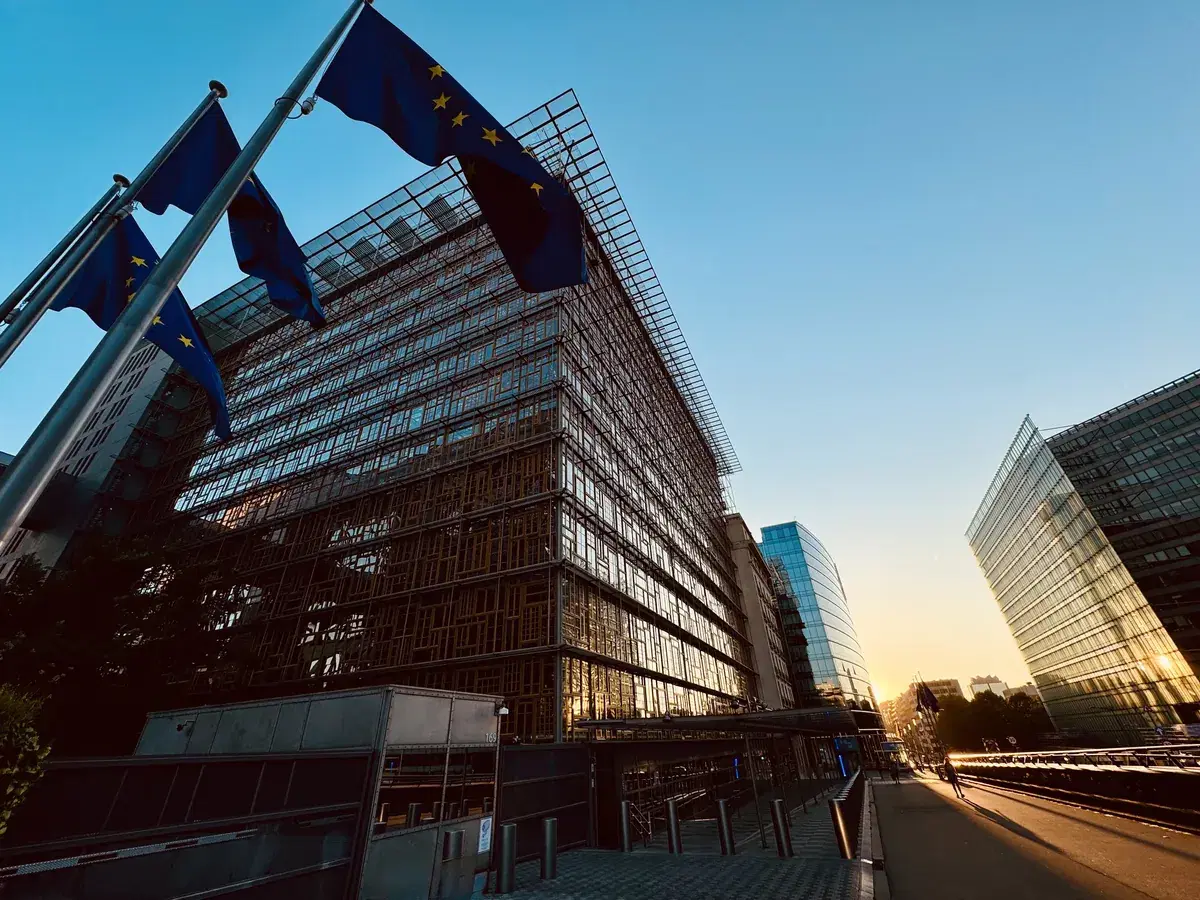
EU Sanctions List at a glance
 Last reviewed by Rosario Andrea Mirante, AML Compliance Officer at dilisense
- The Council of the EU, unanimously, through Council Decisions under the Common Foreign and Security Policy (CFSP).
- The European Commission, which publishes the Consolidated List of persons, groups and entities subject to EU financial sanctions.
- Article 29 TEU (Council Decisions) and Article 215 TFEU (Council Regulations, directly binding on companies).
- The national competent authorities of the 27 member states – there is no central EU enforcement agency.
- Under Directive (EU) 2024/1226, intentional breaches must be criminal offences in every member state, with maximum fines for companies of at least 5% of worldwide turnover or €40 million for most offences.
- Sources are checked multiple times a day, so new EU listings are searchable shortly after publication in the Official Journal.
Coverage
All EU sanctions lists, one search
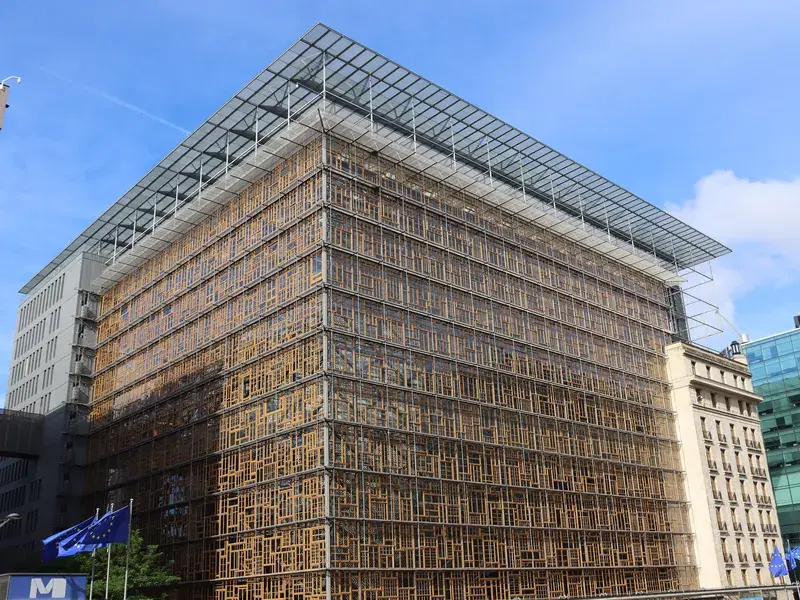
Council of the European Union
Decides unanimously on EU sanctions regimes and on the EU's own listings and renewals through CFSP Decisions, and adopts the Regulations under Article 215 TFEU that bind companies directly.
2 lists in dilisenseOfficial source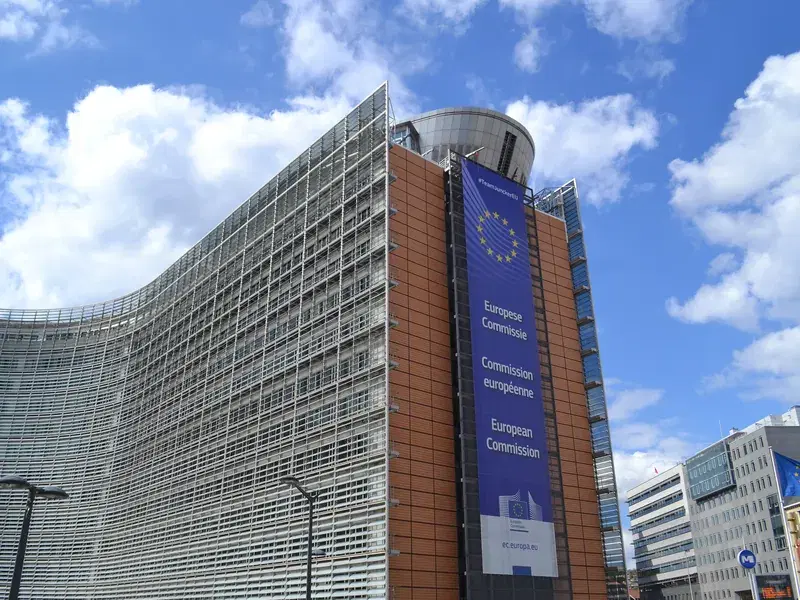
European Commission
Proposes sanctions Regulations jointly with the High Representative, maintains the Consolidated Financial Sanctions List through DG FISMA and monitors implementation by member states.
2 lists in dilisenseOfficial source
High Representative / European External Action Service (EEAS)
Proposes sanctions regimes and listings to the Council and, with the Commission, the Regulations that implement them – supported by the EEAS, the EU's diplomatic service.
No list of its ownOfficial source
One click on the results page widens the search to 130+ further sanctions lists worldwide and PEP data. Browse all sanction sources
Examples
Notable designations on the EU sanctions list
| Name | Type | Regime | Listed | Context |
|---|---|---|---|---|
| Vladimir Vladimirovich Putin | Individual | Ukraine territorial integrity | President of the Russian Federation | |
| Roman Arkadyevich Abramovich | Individual | Ukraine territorial integrity | Businessperson and former governor of Chukotka | |
| PJSC Alrosa | Entity | Ukraine territorial integrity | State-owned Russian diamond mining company | |
| Aliaksandr Ryhoravich Lukashenka | Individual | Belarus | President of Belarus; also listed as Alexandr Grigorievich Lukashenko | |
| Bashar Al-Assad | Individual | Syria | Former President of Syria | |
| Iranian Revolutionary Guard Corps | Entity | Iran (non-proliferation) | Listed in 2010 over Iran's nuclear and missile programmes; also on the EU terrorist list since February 2026 | |
| Wagner Group | Entity | Global human rights | Russia-based private military entity; aliases include Africa Corps | |
| Chosun Expo | Entity | Cyber-attacks | North Korea-based; listed over WannaCry and other cyber-attacks | |
| Anatoliy Vladimirovich Chepiga | Individual | Chemical weapons | GRU officer, alias Ruslan Boshirov; Salisbury nerve agent case, 2018 | |
| Hizballah Military Wing | Entity | Terrorism (EU terrorist list) | Military wing of the Lebanese Hizballah movement |
Click a name to run it through the free search. Dates link to the official designation notice.
EU Sanctions Map
The EU Sanctions Map explains the regimes. This search checks the names.
The EU Sanctions Map gives an overview of all EU sanctions regimes by country, with the underlying legal acts. It is a good starting point to understand which measures apply, and you can look up individual listed names there. What it lacks for screening customers or counterparties: fuzzy matching, batch checks and monitoring.
For screening, you need the EU sanctions list itself: the Consolidated Financial Sanctions List, maintained by the European Commission. Legally, only the Official Journal text is authentic. We screen the list together with the EU travel ban list in one search; one click widens it to every other major sanctions list.
EU sanctions explained: decided unanimously, enforced nationally
What is the EU sanctions list?
The short answer: the EU sanctions list is the Consolidated List of persons, groups and entities subject to EU financial sanctions. All of them are under an EU asset freeze, from Vladimir Putin to the Wagner Group.
Behind it stand more than 30 sanctions regimes. Country regimes cover states such as Russia, Belarus and Iran. Thematic regimes target conduct instead: terrorism, cyber-attacks, human rights violations and chemical weapons. The North Korea-based Chosun Expo, for example, is listed over WannaCry and other cyber-attacks.
Travel bans are not on it: the EU publishes them in a separate list, which is why we screen both. More background: EU sanctions: framework, enforcement and penalties.
What information does the EU sanctions list contain?
Every entry in the Consolidated Financial Sanctions List follows the same structure, whatever the regime. Depending on what the Council has published, an entry contains:
- EU reference number: a unique identifier per entry, such as EU.7510.16 for Vladimir Putin.
- Names and aliases: spellings in other languages and scripts, plus title, function or role. Anatoliy Chepiga, for example, also appears as Ruslan Boshirov, and Putin's function reads “President of the Russian Federation”.
- Identity details: for individuals, date and place of birth, gender, citizenship and document numbers such as passports or national ID cards. For entities, registration and tax numbers.
- Addresses: sometimes with a website, email address or phone number.
- Programme and legal basis: a regime code such as UKR (Ukraine) or IRN (Iran), plus the Council act with its Official Journal reference.
- Listing date and remarks: the date of designation where available, plus the UN reference for listings that implement UN sanctions.
Where to get it: the European Commission publishes the list in its Financial Sanctions Database (FSD) as XML, CSV and PDF files, with an RSS feed for updates. In September 2026 it held more than 6,000 entries: around 4,500 individuals and 1,800 entities.
For the detailed reasons behind a listing, go to the annex of the Council act in the Official Journal. Only the Official Journal text is legally authentic.
Why all these details? They tell a true match from a namesake. The name finds the candidate, the identifiers decide. More in what is sanctions screening.
How EU sanctions are adopted: Decisions and Regulations
Two steps, two legal acts:
- Council Decision (CFSP): sets the policy, meaning who is targeted and which measures apply. Decisions bind the member states; measures such as travel bans are implemented nationally.
- Council Regulation: measures that touch the economy, such as asset freezes, trade and financial restrictions, follow under Article 215 TFEU. A Regulation is directly applicable to every company and person in the EU, without national implementation.
Both are published in the Official Journal of the EU and usually enter into force on the day of publication or the day after. Some measures apply only after a transition period.
The Russia listings show the pairing: Decision 2014/145/CFSP and Regulation (EU) No 269/2014. The Decision sets the policy, the Regulation binds your business.
Who has to screen against EU sanctions?
EU sanctions apply:
- within the territory of the EU, including its airspace;
- on board any aircraft or vessel under the jurisdiction of a member state;
- to all EU nationals and EU-incorporated companies, wherever they operate;
- to any company or organisation in respect of business done in whole or in part within the EU.
Banks, payment institutions, crypto-asset service providers and other obliged entities under EU anti-money laundering rules screen systematically. And everyone else? The ban applies to all: no funds or economic resources for listed persons. Selling spare parts to PJSC Alrosa breaches it as surely as a bank transfer.
Any business with customers, suppliers or counterparties therefore needs a way to check names. More in sanctions screening in Europe.
Ownership and control
A warning up front: an EU asset freeze also covers entities a listed person owns or controls.
Ownership means holding 50% or more, according to the EU's Best Practices (updated in July 2024). Stakes of several listed persons are added together: 30% plus 25% makes 55%, so the entity counts as owned.
Control can also arise from voting rights, the power to appoint or remove directors, or other dominant influence, even de facto. Both are presumptions that can be rebutted case by case.
For corporate customers, screen the beneficial owners and directors too. A company can be frozen without being on the list.
EU sanctions packages against Russia
First, the scale: Russia is by far the largest EU sanctions programme. Its individual listings alone covered more than 3,000 individuals and entities in September 2026. The core rests on two legal frameworks, both first adopted in 2014:
- Decision 2014/145/CFSP and Regulation (EU) No 269/2014: the individual listings, with asset freezes and travel bans, over actions undermining Ukraine's territorial integrity. Their asset freeze covers Vladimir Putin, Roman Abramovich and PJSC Alrosa. In September 2026 the Council extended them until 22 September 2029, three years instead of another six months.
- Decision 2014/512/CFSP and Regulation (EU) No 833/2014: the sectoral restrictions on trade, finance, energy and transport. They include the port and services ban on shadow-fleet vessels in Annex XLII (673 ships after the 21st package).
Smaller regimes cover Crimea and Sevastopol, the occupied regions of Ukraine, Russia's destabilising activities such as hybrid threats, and human rights violations in Russia.
Since February 2022, the EU has tightened both frameworks in packages. As of 3 October 2026 it has adopted 21: the 20th on 23 April 2026, the 21st on 23 July 2026. The 21st added 218 listings (48 individuals and 170 entities), the largest batch in four years.
Two obligations reach beyond the listings:
- Best efforts: EU operators must use their best efforts to ensure non-EU entities they own or control do not undermine the sanctions. This applies under Article 8a of Regulation 833/2014 since June 2024 and Article 15a of Regulation 269/2014 since February 2025.
- No-Russia clause: since 20 March 2024, exporters selling sensitive goods to countries outside the EU's partner list must contractually prohibit re-export to Russia (Article 12g of Regulation 833/2014). Sensitive goods here means common high priority items, aviation goods, jet fuel and firearms.
Every package changes the list: a customer who screened clean after the 20th package can be listed in the 21st. Re-screen existing customers, not just new ones, for example with ongoing monitoring.
Penalties for breaching EU sanctions
Who sets the penalties? The member states, which used to mean different outcomes across the EU. Directive (EU) 2024/1226 harmonises this: every member state must treat intentional sanctions violations and circumvention as criminal offences.
The catch: national laws were due by 20 May 2025, and not all are in place. In July 2025 the Commission opened infringement proceedings against 18 member states. In October 2026 it sent Ireland a reasoned opinion, the last step before court, for not having notified any national measures.
What the Directive requires:
- Individuals: a maximum prison sentence of at least five years for most offences involving €100,000 or more, and for breaches involving military or dual-use goods whatever their value.
- Companies: a maximum fine of at least 5% of worldwide turnover or €40 million for most offences, and at least 1% or €8 million for reporting failures.
Note the “at least”: these figures set a floor for the maximum penalty, not a cap.
Compared
EU sanctions compared with the UK, US and UN
Swipe the table sideways to see all four regimes →
| Aspect | United Kingdom | European Union | United States | United Nations |
|---|---|---|---|---|
| Main sanctions list | UK Sanctions List (FCDO) – the only source of UK designations since 28 January 2026 | Consolidated Financial Sanctions List, maintained by the European Commission | OFAC's Specially Designated Nationals and Blocked Persons (SDN) List | UN Security Council Consolidated List |
| Designations made by | FCDO; HM Treasury for the domestic counter-terrorism regime | Council of the EU, unanimously, on proposals from the High Representative and Commission | Treasury (OFAC) and the State Department; Commerce (BIS) for export control lists | Mainly the Security Council's sanctions committees, deciding by consensus |
| Legal basis | Sanctions and Anti-Money Laundering Act 2018 (SAMLA) and regulations made under it | Council Decisions (Art. 29 TEU) and directly applicable Council Regulations (Art. 215 TFEU) | IEEPA and the Trading with the Enemy Act, mostly via executive orders; ECRA for export controls | Chapter VII of the UN Charter (Article 41), through Security Council resolutions |
| Sanctions regimes | 35+ country and thematic regimes | 40+ regimes, UN-mandated and autonomous | 35+ OFAC sanctions programmes | 15 regimes, each run by a Security Council committee |
| Ownership rule | Owned more than 50% or controlled by a designated person; separate stakes not simply added up | 50% or more, adding up listed owners' stakes, or control (Council Best Practices 2024) | Owned 50% or more by blocked persons, individually or in aggregate; control alone does not block automatically | Assets owned or controlled, directly or indirectly, by listed persons; no % threshold set |
| Who must comply | Everyone in the UK, plus UK nationals and UK-incorporated companies worldwide | Anyone in the EU, EU nationals and EU companies worldwide, and any business done in the EU | US persons worldwide and anyone in the US; non-US firms can be liable via USD payments or US goods | All UN member states (Art. 25 UN Charter); businesses are bound through national or EU law |
| Where to report a match | OFSI, as soon as practicable – a legal duty for relevant firms such as banks | Competent authority of the member state where you are resident or located, immediately | OFAC, within 10 business days of blocking property or rejecting a transaction | Your national competent authority; member states liaise with the UN sanctions committees |
| Maximum penalties | Civil: £1m or 50% of the breach value, whichever is higher; criminal: up to 7 years' prison (10 for trade sanctions) | Set nationally; for serious breaches, Directive 2024/1226 requires maximums of at least 5 years' prison and 5% of turnover or €40m | IEEPA (most programmes) – civil: $377,700 or twice the transaction value, whichever is greater; criminal: up to $1m and 20 years' prison | None at UN level – member states impose penalties under national law |
One subscription
UK, EU, US and UN sanctions – already covered in one subscription
No separate feeds or licences per jurisdiction: a dilisense subscription screens all four regimes together with 130+ further sanctions lists and PEP data – via API, batch upload or ongoing monitoring. Start with 100 free API calls per month.
How it works
How to check a name against the EU sanctions list
- 01
Enter the name
Search for a person or company above. Fuzzy matching also finds spelling variants and transliterations: Lukashenka for Lukashenko.
- 02
Compare the identifiers
Names alone prove little: date of birth, nationality, aliases and addresses separate a true match from a namesake.
- 03
Document and act
Record every check. For a confirmed match, freeze the assets and report to the national competent authority.
Screening more than a handful of names?
EU Sanctions List: frequently asked questions
For asset freezes, yes: the official EU sanctions list is the Consolidated List of persons, groups and entities subject to EU financial sanctions, maintained by the European Commission. Travel bans are listed separately. One dilisense search covers both.
Individuals, companies and organisations designated under one of the EU's sanctions regimes, by the Council of the EU or, for UN sanctions, by the UN Security Council. They range from heads of state, ministers and military officers to businesspeople, banks, defence and oil companies and terrorist groups. In September 2026 the EU sanctions list held more than 6,000 entries. The regime on Ukraine's territorial integrity alone covered over 3,000 individuals and entities.
The EU sanctions list is organised by sanctions regime, not by country: the country regimes cover Russia, Belarus, Iran, North Korea, Syria, Myanmar, Venezuela, Libya and Sudan, among others. Thematic regimes on terrorism, cyber-attacks, human rights violations and chemical weapons can target people and companies of any nationality. The EU Sanctions Map shows every regime with its legal acts.
The EU Sanctions Map explains the regimes; the EU sanctions list is what you screen names against. The map is an overview: all EU sanctions regimes by country, their legal acts and a simple look-up of listed names. The list is the Consolidated Financial Sanctions List: the full, downloadable list of persons and entities subject to EU financial sanctions.
Only exceptionally: the Consolidated Financial Sanctions List covers persons, groups and entities, and in September 2026 it contained two ships, both tankers listed under the North Korea regime. Russia's shadow-fleet vessels are listed separately, in Annex XLII to Regulation (EU) No 833/2014: 673 ships after the 21st package of July 2026. They are barred from EU ports and services such as insurance and bunkering. Screen vessel names and IMO numbers against that annex as well.
Partly. EU sanctions bind EU nationals and EU-incorporated companies worldwide, and any business done in whole or in part in the EU. Non-EU subsidiaries of EU companies are not bound directly. Under the Russia regime, however, EU parent companies must use their best efforts to make sure those subsidiaries do not undermine the sanctions.
Yes. The EU sanctions search on this page is free, unlimited and requires no sign-up. It searches every EU sanctions list; one click on the results page widens it to all other sanctions lists and PEP data. To screen customers automatically, use the dilisense AML Screening API or Batch Screening.
There is no fixed schedule: the EU sanctions list changes whenever the Council publishes new listings, amendments or delistings, or the Commission does so for some UN-based listings. dilisense checks its sources multiple times a day, so changes become searchable shortly after publication.
First, verify the match: compare identifiers such as date of birth and nationality, because a name alone proves little. If it is a true match, do not make funds available, freeze any assets you hold and report to the competent authority in your member state. This page is not legal advice, so involve your compliance officer or legal counsel.

Talk to our team about API access, batch screening and monitoring.
Insights
Further reading
4 min read
EU Sanctions: Framework, Enforcement and Penalties
How EU sanctions work, why breaches are now criminal in member states, the penalties and what it means for screening.
8 min read
Sanctions screening in Europe
Discover how EU sanctions screening works, its critical role in compliance, and the future of automated solutions in the industry.
13 min read
What is Sanctions Screening?
Get an overiew of one of the most crucial compliance processes.
Other sanctions jurisdictions
Photos: Building by Cbliu (opens in a new tab), CC BY-SA 4.0 (cropped) (opens in a new tab) · flag by Gioele Serra (opens in a new tab), CC BY-SA 4.0 (cropped) (opens in a new tab) · Council of the European Union by FrDr (opens in a new tab), CC BY-SA 4.0 (cropped) (opens in a new tab) · European Commission by Daniel from Glasgow, United Kingdom (opens in a new tab), CC BY 2.0 (cropped) (opens in a new tab) · High Representative / European External Action Service (EEAS) by EmDee (opens in a new tab), CC BY-SA 4.0 (cropped) (opens in a new tab)