OFAC · BIS · State Department · DoD · DHS
Search every US sanctions list at once
One free search, no sign-up: OFAC's SDN and non-SDN lists, the BIS Entity List and Denied Persons List, State Department designations, plus DoD, DHS and other federal lists.
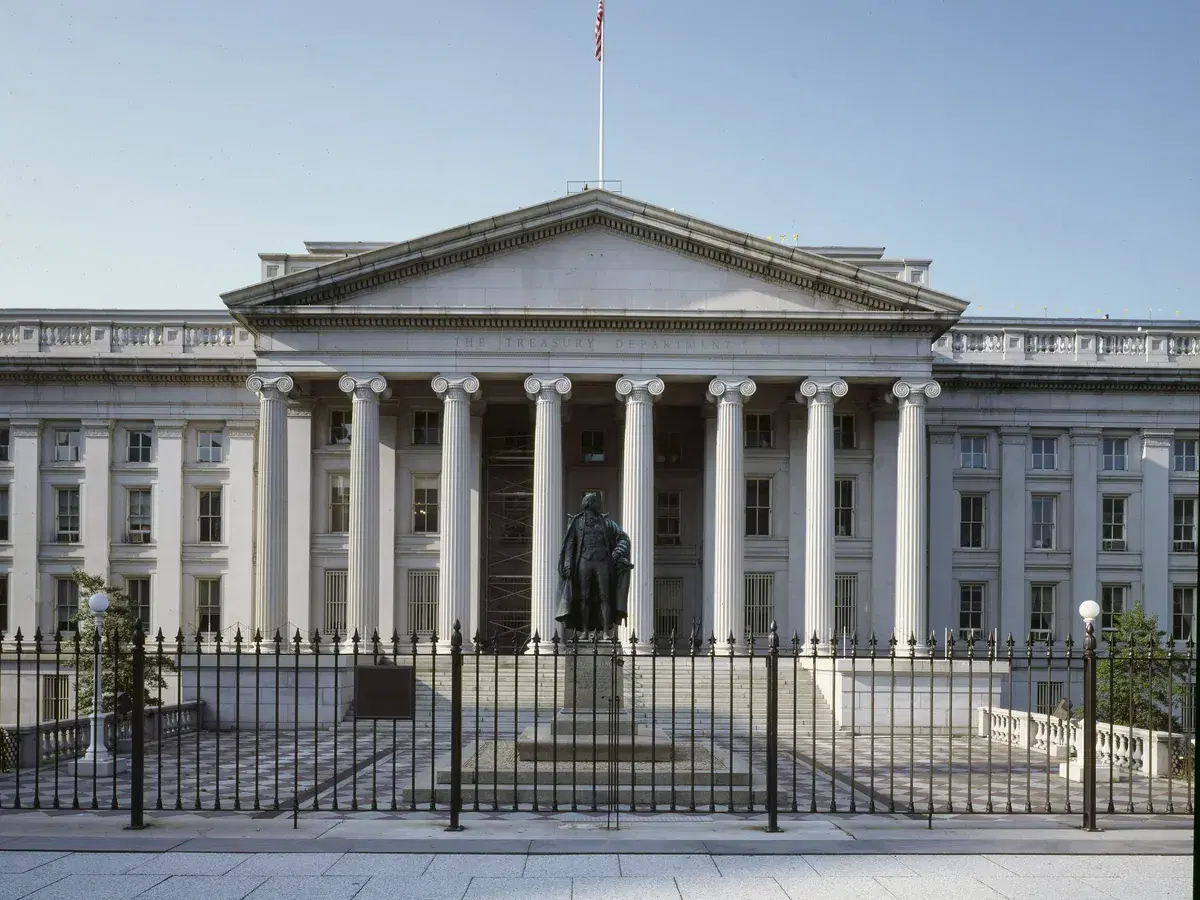
US Sanctions List at a glance
 Last reviewed by Rosario Andrea Mirante, AML Compliance Officer at dilisense
- Treasury (OFAC), Commerce (BIS) and the State Department – plus lists from the Departments of Defense and Homeland Security.
- SDN List, Non-SDN Consolidated Sanctions List, Entity List, Denied Persons List, Unverified List, Military End-User List.
- Mainly the International Emergency Economic Powers Act (IEEPA), the Trading with the Enemy Act and the Export Control Reform Act.
- US persons worldwide – and non-US companies whenever US dollars, US-origin goods or the US financial system are involved.
- Under IEEPA: civil penalties of up to $377,700 per violation or twice the transaction value, whichever is greater; criminal penalties for willful violations of up to $1 million and 20 years in prison.
- Sources are checked multiple times a day, so new US designations are searchable shortly after publication.
Coverage
All US sanctions lists, one search
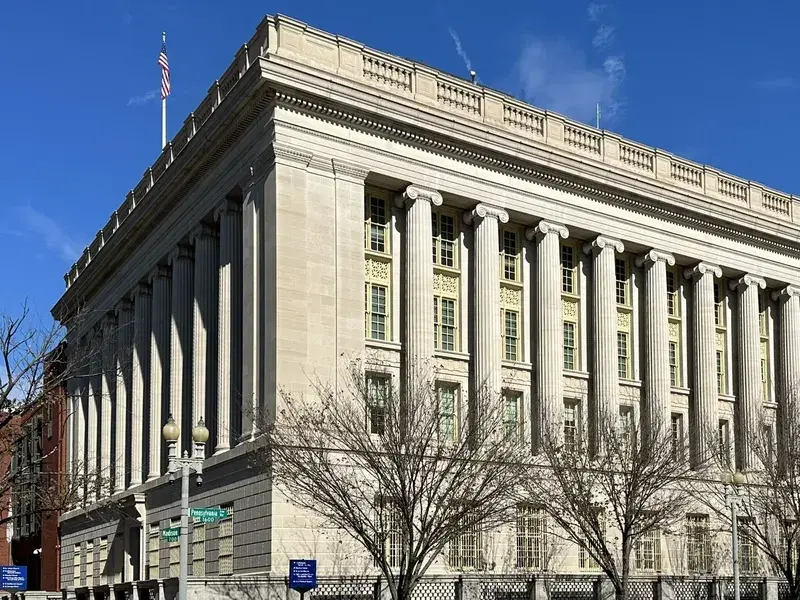
U.S. Department of the Treasury
Office of Foreign Assets Control (OFAC)
Administers and enforces US economic and trade sanctions, adds persons to the SDN List and issues the licenses that authorize otherwise prohibited dealings.
- 31 CFR part 587
- 31 CFR part 587 - General License 26
- 31 CFR part 587 - General License 30
- Executive Order 13959 of Nov. 12, 2020
- Non-SDN sanction list
- Specially Designated Nationals
6 lists in dilisenseOfficial source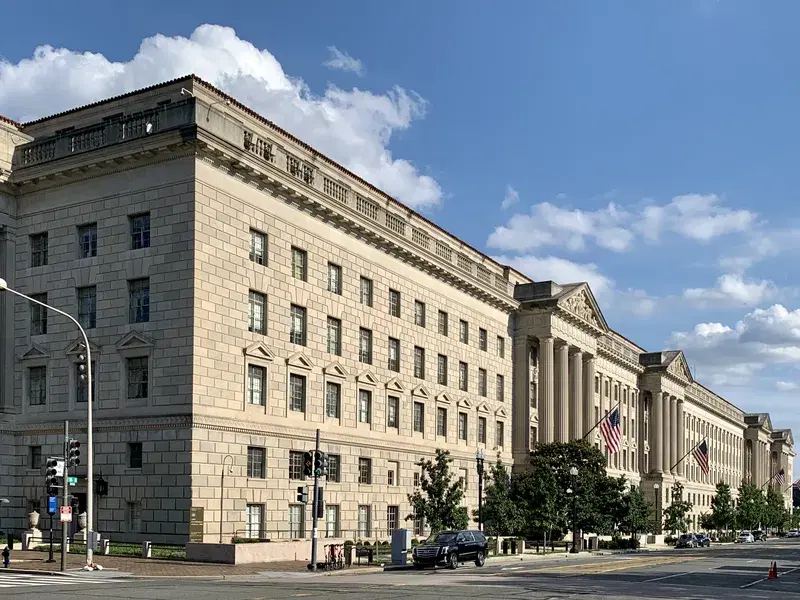
U.S. Department of Commerce
Bureau of Industry and Security (BIS)
Administers US export controls under the Export Administration Regulations and maintains the Entity List, Denied Persons List, Unverified List and Military End-User List.
4 lists in dilisenseOfficial source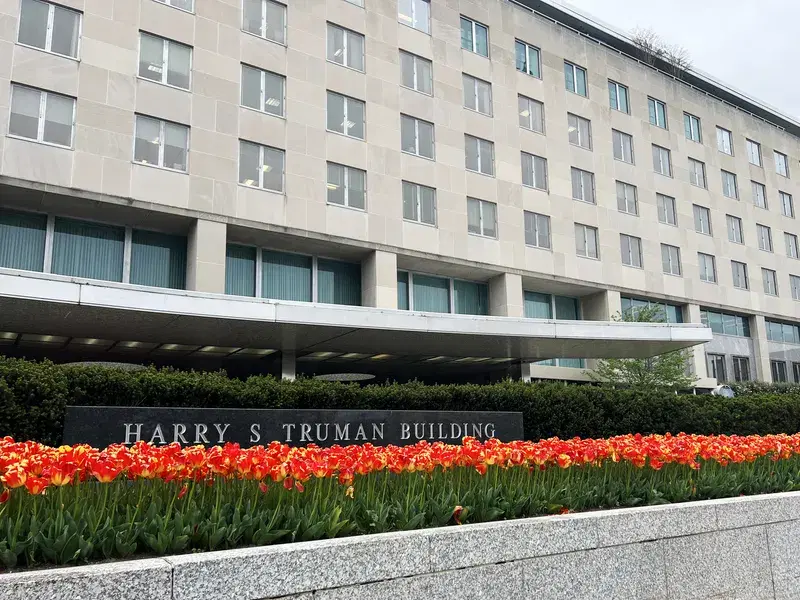
U.S. Department of State
Designates Foreign Terrorist Organizations, imposes nonproliferation and other foreign-policy sanctions and, through DDTC, debars violators of the Arms Export Control Act.
- AECA Debarred Administrative List
- AECA Debarred Statutory List
- CAATSA Section 231(e)
- Cuba Restricted List
- Foreign Terrorist Organizations
- Nonproliferation Sanctions
- Section 7031(c)
- Terrorist Exclusion List
8 lists in dilisenseOfficial source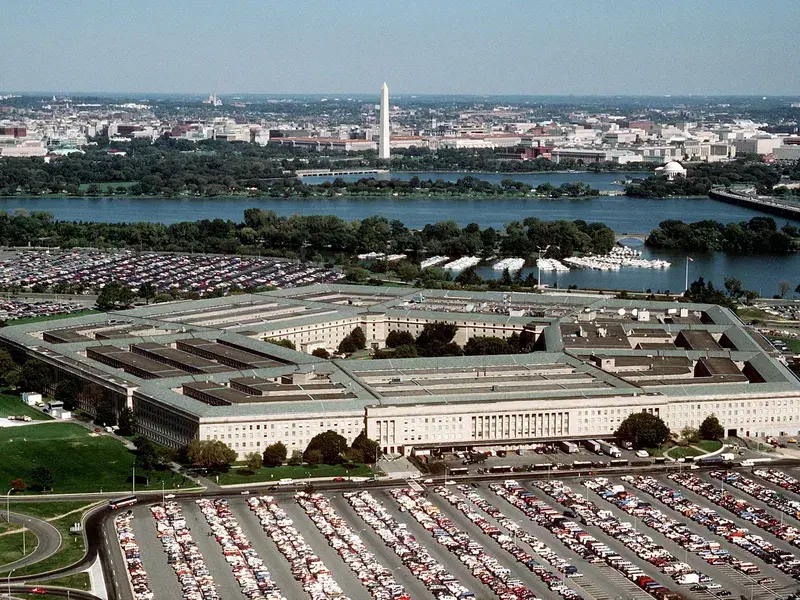
U.S. Department of Defense
Identifies Chinese military companies operating in the US under Section 1260H of the FY2021 NDAA and publishes the list in the Federal Register at least once a year; under Section 1286 of the FY2019 NDAA, it also lists foreign academic institutions and talent programs that pose security risks to DoD-funded research.
2 lists in dilisenseOfficial source
U.S. Department of Homeland Security
Chairs the Forced Labor Enforcement Task Force, which maintains the UFLPA Entity List; CBP bars imports of goods made by listed entities under a rebuttable forced-labor presumption.
2 lists in dilisenseOfficial source
Also included: Enforcement Actions (Office of the Comptroller of the Currency)
One click on the results page widens the search to 130+ further sanctions lists worldwide and PEP data. Browse all sanction sources
Examples
Notable designations on US sanctions lists
| Name | Type | Regime | Listed | Context |
|---|---|---|---|---|
| Open Joint-Stock Company Rosneft Oil Company | Entity | Russia (EO 14024) | Russian oil company; on OFAC's SSI List since July 2014, blocked in 2025 for operating in the energy sector | |
| Cartel de Sinaloa | Entity | Foreign Terrorist Organization | Mexican cartel; designated SDGT the same day, on the SDN List under the Kingpin Act since 2009 | |
| Dmitry Yuryevich Khoroshev | Individual | Cyber (EO 13694) | Senior leader of the LockBit ransomware group | |
| Vladimir Vladimirovich Putin | Individual | Russia (EO 14024) | President of the Russian Federation | |
| Lazarus Group | Entity | North Korea (EO 13722) | North Korean state-sponsored cyber group | |
| Adrian Darya 1 | Vessel | Counter Terrorism (EO 13224) | Oil tanker, formerly Grace 1; IMO 9116412 | |
| Huawei Technologies Co., Ltd. | Entity | BIS Entity List | Chinese telecom equipment maker, added with 68 non-US affiliates | |
| Yahya Jammeh | Individual | Global Magnitsky (EO 13818) | Former President of The Gambia | |
| Kim Jong Un | Individual | North Korea (EO 13722) | Leader of North Korea, designated over human rights abuses | |
| Hizballah | Entity | Foreign Terrorist Organization | Lebanon-based group; among the first FTOs designated in 1997 |
Click a name to run it through the free search. Dates link to the official designation notice.
Consolidated Screening List
Looking for the Consolidated Screening List? Search it here.
The Consolidated Screening List (CSL) is published by the International Trade Administration. It merges 13 export screening lists from Commerce, State and the Treasury, including the SDN List, the BIS Entity List and the Denied Persons List.
We cover the lists behind the CSL and add US lists it leaves out, such as the DHS UFLPA Entity List and the DoD Section 1260H list of Chinese military companies. The result: one search, whichever US sanctions list a name is on.
Only need OFAC? Use the dedicated OFAC sanctions search.
Inside US sanctions lists
Which US sanctions lists exist?
Short answer: there is no single US sanctions list. Several agencies publish their own lists, each with a different legal effect:
- Treasury (OFAC): the Specially Designated Nationals (SDN) List and the Non-SDN Consolidated Sanctions List, including sectoral sanctions.
- Commerce (BIS): the Entity List, Denied Persons List, Unverified List and Military End-User List for export controls.
- State Department: Foreign Terrorist Organizations, nonproliferation sanctions, CAATSA Section 231, the Cuba Restricted List and AECA debarments.
- Defense: the Section 1260H list of Chinese military companies and the Section 1286 list of foreign academic institutions and talent programs that pose risks to DoD-funded research.
- Homeland Security: the UFLPA Entity List on forced labor.
The list decides the duty: SDN means blocking, Entity List means a license requirement.
Deep dives: the OFAC sanctions lists and the SDN List.
What information does a US sanctions list entry contain?
Start with the SDN List: an entry is more than a name. Depending on what OFAC knows about the target, it can include:
- Names: the primary name plus aliases (a.k.a.) and former names (f.k.a.); OFAC's enhanced data adds spellings in non-Latin scripts. Overly broad aliases are marked "weak", and screening tools may exclude them as part of a risk-based approach.
- Identifiers: date and place of birth, nationality and citizenship, passport, national ID and tax numbers, business registration numbers and addresses. Some entries also list websites, email or digital currency addresses.
- Program tags: codes in square brackets, such as [RUSSIA-EO14024], [SDGT] or [CYBER2], which name the legal authority behind the listing.
- Vessel data: vessel type, flag, call sign, tonnage and IMO and MMSI numbers. Take the tanker Adrian Darya 1 from the table above: renamed from Grace 1, but still IMO 9116412.
- Links and flags: "Linked To:" references to related SDNs, and notes such as "Secondary sanctions risk: See Section 11 of Executive Order 14024". This note warns that foreign financial institutions that conduct or facilitate significant transactions involving the party risk being sanctioned themselves.
A BIS Entity List entry looks different. Besides the country and the entity with its aliases and addresses, it sets out three points under the Export Administration Regulations (EAR):
- License requirement: often "for all items subject to the EAR". Footnotes can extend it to certain foreign-made items.
- License review policy: frequently a presumption of denial.
- Federal Register citation: for each rule that added or amended the entry.
The upshot: a name match alone proves little. Use the identifiers to tell a true match from a namesake before you act – see how sanctions screening works.
OFAC vs. BIS: sanctions vs. export controls
In one sentence: SDN listings freeze assets under US jurisdiction; Entity listings require a license for EAR items.
An SDN listing, like Rosneft's, blocks all property and interests in property of the designated person under US jurisdiction. US persons generally may not deal with them unless OFAC has licensed the transaction or it is exempt.
The BIS Entity List, which includes Huawei, does not freeze assets. It requires a license to export, reexport or transfer items subject to the Export Administration Regulations to the listed party, usually with a presumption of denial. So it matters to manufacturers and distributors worldwide that handle US-origin goods, software or technology.
Who has to screen against US sanctions lists?
Two groups. First, US persons: US citizens and permanent residents, companies organized under US law and anyone in the United States. They must comply wherever they are.
Second, non-US companies are exposed as well:
- US dollars: payments clear through US banks and can be blocked.
- US-origin items: export controls follow them, even after reexport from another country.
- Secondary sanctions: they can target non-US companies that do significant business with sanctioned parties.
In practice, banks, payment providers, crypto businesses and exporters worldwide screen against US lists alongside their domestic ones. US sanctions travel with US persons, US dollars and US-origin goods.
OFAC's 50 Percent Rule
Not on the SDN List, so not blocked? Not if Rosneft owns half of it. OFAC's 50 Percent Rule blocks any entity owned 50% or more by one or more blocked persons, directly or indirectly, individually or in aggregate.
Name screening is only step one: for corporate customers, check the ownership structure and screen the beneficial owners too. A clean name can hide a blocked owner.
US sanctions on Russia
First, the scale: as of the SDN List update of October 2, 2026, 6,346 of its 19,488 entries carried the [RUSSIA-EO14024] tag. That is more than any other program. Among them: 444 vessels and 90 aircraft.
Most Russia-related US listings rest on Executive Order 14024 of April 15, 2021, implemented in the Russian Harmful Foreign Activities Sanctions Regulations (31 CFR part 587). Since 2022, EOs 14066, 14068 and 14071 have added import and export bans and a ban on new investment in Russia. Listings under the Ukraine-related orders of 2014 also remain in force.
Three dates stand out:
- February 25, 2022: OFAC designated President Vladimir Putin.
- October 22, 2025: OFAC designated Rosneft and Lukoil, Russia's two largest oil companies, and 34 of their Russian subsidiaries.
- September 18, 2026: the Lindsey O. Graham Sanctioning Russia and Iran Act of 2026 became law.
For five years, the Act writes the sanctions in force under EO 14024 and its follow-up orders into law, including every listing in place at enactment. Lifting them now requires a certification and report to Congress. Terminating sanctions on Russian persons also requires a peace agreement accepted by Ukraine, an end to hostilities and a congressional review period of at least 30 days.
The Act also requires tariffs of up to 500% on Russian goods and full sanctions on all Russian state-owned banks. These include Sberbank, VTB and Gazprombank, which were already on the SDN List.
Export controls: BIS requires a license to export, reexport or transfer any item on the Commerce Control List to or within Russia and Belarus. The same goes for many lower-tech goods listed by tariff code. Foreign direct product rules extend this to certain foreign-made items, and applications generally face a policy of denial.
Secondary sanctions: since EO 14114 of December 22, 2023, OFAC can restrict or block foreign financial institutions (FFIs) that conduct significant transactions involving Russia's military-industrial base. That base includes every person blocked under EO 14024. The 2026 Act also directs sanctions, subject to exceptions, on FFIs that do significant business with Russia's state-owned banks.
Listings change in both directions: OFAC also removed Russia-related designations in 2026. A clean result is only as current as the list behind it, so pair list checks with ongoing monitoring.
Penalties for violating US sanctions
Does it matter whether you knew? Not for civil liability. OFAC enforces sanctions on a strict-liability basis: you can face a civil penalty even if you did not know the party was sanctioned.
- Civil penalties: under IEEPA, the inflation-indexed maximum is currently $377,700 per violation or twice the transaction value, whichever is greater.
- Criminal penalties: willful violations can bring fines of up to $1 million and up to 20 years in prison.
OFAC considers an effective compliance program, including risk-based screening, a mitigating factor. Under strict liability, not knowing is no defense; screening is how you know.
Compared
US sanctions compared with the UK, EU and UN
Swipe the table sideways to see all four regimes →
| Aspect | United Kingdom | European Union | United States | United Nations |
|---|---|---|---|---|
| Main sanctions list | UK Sanctions List (FCDO) – the only source of UK designations since 28 January 2026 | Consolidated Financial Sanctions List, maintained by the European Commission | OFAC's Specially Designated Nationals and Blocked Persons (SDN) List | UN Security Council Consolidated List |
| Designations made by | FCDO; HM Treasury for the domestic counter-terrorism regime | Council of the EU, unanimously, on proposals from the High Representative and Commission | Treasury (OFAC) and the State Department; Commerce (BIS) for export control lists | Mainly the Security Council's sanctions committees, deciding by consensus |
| Legal basis | Sanctions and Anti-Money Laundering Act 2018 (SAMLA) and regulations made under it | Council Decisions (Art. 29 TEU) and directly applicable Council Regulations (Art. 215 TFEU) | IEEPA and the Trading with the Enemy Act, mostly via executive orders; ECRA for export controls | Chapter VII of the UN Charter (Article 41), through Security Council resolutions |
| Sanctions regimes | 35+ country and thematic regimes | 40+ regimes, UN-mandated and autonomous | 35+ OFAC sanctions programmes | 15 regimes, each run by a Security Council committee |
| Ownership rule | Owned more than 50% or controlled by a designated person; separate stakes not simply added up | 50% or more, adding up listed owners' stakes, or control (Council Best Practices 2024) | Owned 50% or more by blocked persons, individually or in aggregate; control alone does not block automatically | Assets owned or controlled, directly or indirectly, by listed persons; no % threshold set |
| Who must comply | Everyone in the UK, plus UK nationals and UK-incorporated companies worldwide | Anyone in the EU, EU nationals and EU companies worldwide, and any business done in the EU | US persons worldwide and anyone in the US; non-US firms can be liable via USD payments or US goods | All UN member states (Art. 25 UN Charter); businesses are bound through national or EU law |
| Where to report a match | OFSI, as soon as practicable – a legal duty for relevant firms such as banks | Competent authority of the member state where you are resident or located, immediately | OFAC, within 10 business days of blocking property or rejecting a transaction | Your national competent authority; member states liaise with the UN sanctions committees |
| Maximum penalties | Civil: £1m or 50% of the breach value, whichever is higher; criminal: up to 7 years' prison (10 for trade sanctions) | Set nationally; for serious breaches, Directive 2024/1226 requires maximums of at least 5 years' prison and 5% of turnover or €40m | IEEPA (most programmes) – civil: $377,700 or twice the transaction value, whichever is greater; criminal: up to $1m and 20 years' prison | None at UN level – member states impose penalties under national law |
One subscription
UK, EU, US and UN sanctions – already covered in one subscription
No separate feeds or licences per jurisdiction: a dilisense subscription screens all four regimes together with 130+ further sanctions lists and PEP data – via API, batch upload or ongoing monitoring. Start with 100 free API calls per month.
How it works
How to check a name against US sanctions lists
- 01
Enter the name
Type a person or company name above. Fuzzy matching also finds spelling variants and transliterations, so review each hit.
- 02
Compare the identifiers
Check date of birth, nationality, addresses and ID numbers: they separate a true match from a namesake.
- 03
Document and act
Record each check, clean or not. For a confirmed SDN match, block the property or reject the transaction as required and report it to OFAC within 10 business days.
Screening more than a handful of names?
US Sanctions List: frequently asked questions
There is no single US sanctions list: the best known is OFAC's Specially Designated Nationals and Blocked Persons List (SDN List). Other agencies keep their own lists, such as the BIS Entity List and the State Department's list of Foreign Terrorist Organizations. The closest thing to one list: the Consolidated Screening List, which combines 13 export screening lists from Commerce, State and the Treasury.
One list blocks, the other restricts. The SDN List contains persons whose property is blocked: US persons are generally prohibited from dealing with them unless OFAC authorizes it. The Non-SDN Consolidated Sanctions List contains persons subject to narrower restrictions, such as sectoral sanctions that only prohibit certain debt or equity transactions. A dilisense search covers both.
As of the update of October 2, 2026, the SDN List had 19,488 entries: 10,037 entities, 7,570 individuals, 1,539 vessels and 342 aircraft. Of these, 6,346 carried the Russia program tag [RUSSIA-EO14024]. Any count is a snapshot: OFAC updates the list frequently, so screen against current data, not a saved copy.
No, it is broader. The Consolidated Screening List (CSL) of the International Trade Administration combines 13 export screening lists from Commerce, State and the Treasury. OFAC's lists are one part, alongside the BIS Entity List, the Denied Persons List and State Department lists.
OFAC maintains comprehensive sanctions on Cuba, Iran, North Korea and the Crimea, so-called Donetsk People's Republic and Luhansk People's Republic regions of Ukraine. Comprehensive sanctions on Syria ended on July 1, 2025. Most other programs are targeted: they apply to listed persons and specific sectors and activities, not the whole country. That includes Russia: on October 2, 2026, EO 14024 was the SDN List's largest program.
Often, yes. US sanctions apply whenever there is a US nexus, meaning a link to the United States such as payments in US dollars, US-origin goods or technology, or US employees. Secondary sanctions can also target non-US companies. Many banks therefore expect their customers to screen against US sanctions lists.
Yes: free, unlimited and without sign-up. The dilisense search covers every US sanctions list; one click on the results page widens it to further sanctions lists and PEP data. For automated screening, use the dilisense AML Screening API or Batch Screening.
There is no fixed schedule. OFAC, BIS and the State Department publish designations, amendments and removals as they take effect – OFAC often several times a week. dilisense checks its sources multiple times a day, so changes become searchable shortly after publication.
A US sanctions list match is a lead, not a verdict: verify it with identifiers such as date of birth, nationality and ID numbers. For a confirmed SDN match, block the property or reject the transaction as required and report it to OFAC within 10 business days; for an Entity List match, check the license requirement before any export. This page is not legal advice: involve your compliance officer or legal counsel.

Talk to our team about API access, batch screening and monitoring.
Insights
Further reading
3 min read
The OFAC Sanctions Lists: SDN, Consolidated and How to Screen Them
How OFAC's sanctions lists fit together, what each one covers and how to check a name against them.

5 min read
The OFAC SDN List: How Specially Designated Nationals Are Listed, Screened and Blocked
How OFAC lists Specially Designated Nationals, how to read an entry and what to do when a name matches.
5 min read
OFAC Sanctions: An Overview of the Most Prominent Sanctions Regime
What OFAC is, who must comply, the penalties and what it means for screening.
Other sanctions jurisdictions
Photos: Building by Carol M. Highsmith (opens in a new tab), Public domain · flag by Roc0ast3r (opens in a new tab), CC0 (opens in a new tab) · Office of Foreign Assets Control (OFAC) by APK (opens in a new tab), CC BY 4.0 (cropped) (opens in a new tab) · Bureau of Industry and Security (BIS) by APK (opens in a new tab), CC BY-SA 4.0 (cropped) (opens in a new tab) · U.S. Department of State by Linda D. Epstein, U.S. Department of State (opens in a new tab), Public domain · U.S. Department of Defense by Master Sgt. Ken Hammond, U.S. Air Force (opens in a new tab), Public domain · U.S. Department of Homeland Security by Tara Molle, U.S. Department of Homeland Security (opens in a new tab), Public domain