UN sanctions · Security Council · Chapter VII
Search the UN Sanctions List
One free search, every UN Security Council listing: check any person, company or ship against the UN Consolidated List, the ISIL (Da’esh) & Al-Qaida Sanctions List and the 1718 Designated Vessels List.
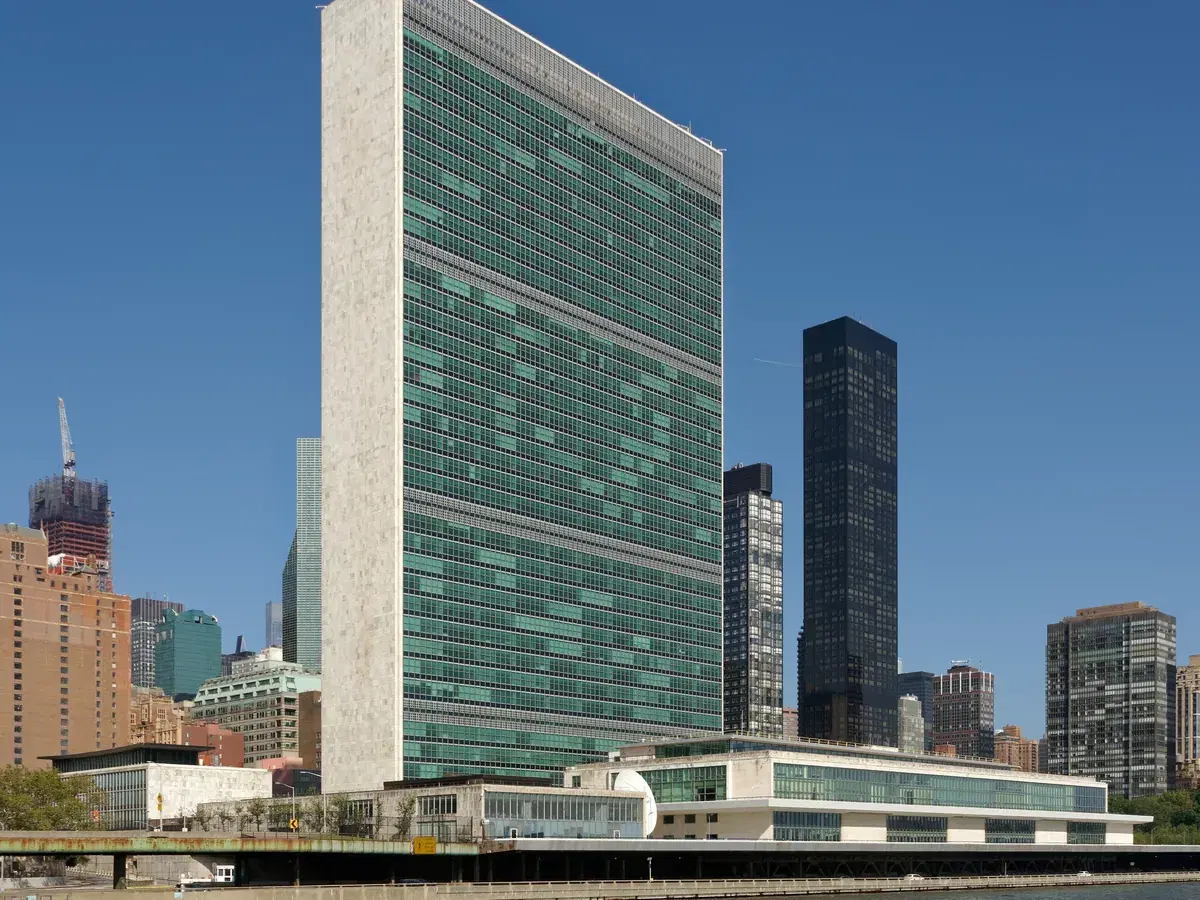
UN Sanctions List at a glance
 Last reviewed by Rosario Andrea Mirante, AML Compliance Officer at dilisense
- The UN Security Council: its Consolidated List combines the sanctions lists of all its sanctions committees in one document.
- The Security Council in its resolutions and, for most listings, its sanctions committees. Each committee comprises all 15 Council members and decides by consensus.
- Chapter VII of the UN Charter: Article 41 allows measures not involving armed force, Article 25 obliges member states to carry them out.
- All 193 UN member states. Companies and individuals are bound by the national or EU law that implements the UN measures, not by the UN list itself.
- None at UN level: each member state sets and enforces its own penalties for breaching UN sanctions.
- Sources are checked multiple times a day, so new UN listings are searchable shortly after the Security Council publishes them.
Coverage
Every UN sanctions list, one search
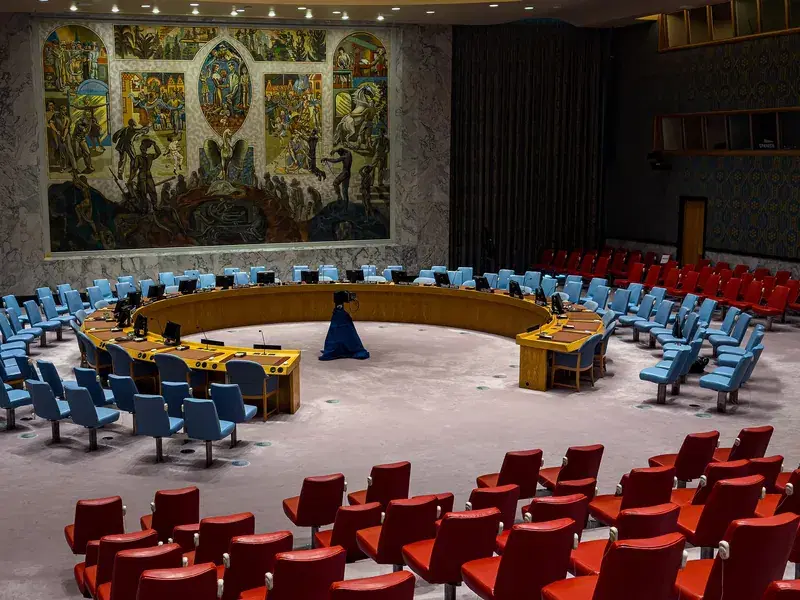
UN Security Council
Imposes sanctions under Chapter VII of the UN Charter, creates each regime and its committee by resolution, and publishes the Consolidated List of all UN listings.
3 lists in dilisenseOfficial source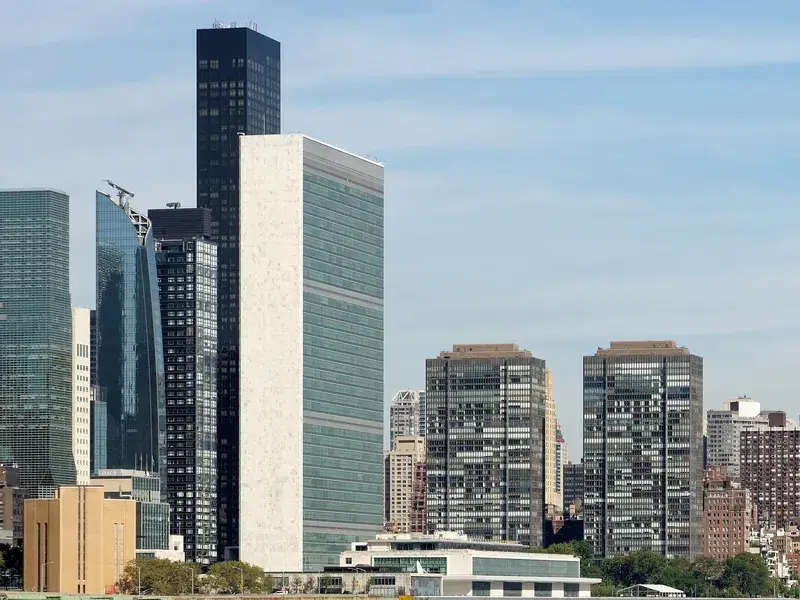
UN Security Council
Sanctions committees and the Office of the Ombudsperson
The 15 committees decide on listings, delistings and exemptions by consensus; the Ombudsperson reviews delisting requests for the ISIL (Da’esh) and Al-Qaida list.
No list of its ownOfficial source
One click on the results page widens the search to 130+ further sanctions lists worldwide and PEP data. Browse all sanction sources
Examples
Notable designations on the UN sanctions list
| Name | Type | Regime | Listed | Context |
|---|---|---|---|---|
| Al-Qaida | Entity | ISIL (Da’esh) & Al-Qaida | International terrorist network; aliases include "The Base" | |
| Sirajuddin Jallaloudine Haqqani | Individual | Taliban (1988) | Head of the Haqqani Network, linked to the Taliban and Al-Qaida | |
| Reconnaissance General Bureau | Entity | DPRK (1718) | North Korea’s main intelligence organisation | |
| An San 1 | Vessel | DPRK (1718) | North Korean tanker (IMO 7303803), ship-to-ship transfers of oil | |
| Joseph Kony | Individual | Central African Republic | Founder and leader of the Lord’s Resistance Army (LRA) | |
| Al-Shabaab | Entity | Al-Shabaab (Somalia) | Armed group listed for threatening peace and security in Somalia | |
| Abdulmalik al-Houthi | Individual | Yemen (2140) | Leader of the Houthi movement in Yemen | |
| Jimmy Cherizier | Individual | Haiti (2653) | Haitian gang leader and former police officer, alias Barbeque | |
| Viv Ansanm | Entity | Haiti (2653) | Coalition of gangs in Port-au-Prince, led by Jimmy Cherizier | |
| Abdul Rahim Hamdan Dagalo | Individual | Sudan (1591) | Deputy Commander of the Rapid Support Forces (RSF) |
Click a name to run it through the free search. Dates link to the official designation notice.
UN Consolidated List
Looking for the UN Consolidated List? Search it here, and see where it leads.
The UN Security Council Consolidated List is the official UN sanctions list: one document with every individual and entity subject to Security Council sanctions. The UN publishes it as PDF, XML and HTML. On 6 October 2026, it held 1,010 entries: 736 individuals and 274 entities.
What the list does not do: bind your business directly. UN listings take effect through national or EU law. In the UK, a person named by the UN becomes a designated person under the Sanctions and Anti-Money Laundering Act 2018. In the EU, the European Commission adds UN listings to EU law by implementing regulation.
That is why one search is worth more than one list. We screen every UN sanctions list together; one click on the results page widens the check to the UK, EU and US sanctions lists that carry the UN listings into law. The UN decides, your national law binds.
The UN sanctions list, explained
What is the UN sanctions list?
In one sentence: the UN sanctions list is the United Nations Security Council Consolidated List, the register of all individuals and entities subject to measures imposed by the Security Council. It brings together the lists of the Council’s sanctions committees, from the ISIL (Da’esh) and Al-Qaida regime to North Korea, Haiti and Sudan.
One list, but not one regime: the UN stresses that the common list neither implies that all names fall under one regime nor that the criteria for listing them are the same. Each committee decides on its own listings and its own measures. The most common ones are an asset freeze, a travel ban and an arms embargo.
On 6 October 2026, the list held 1,010 entries: 736 individuals and 274 entities. Small compared with national lists, but every entry has a special weight: the Security Council has decided it, and all 193 member states must implement it. A UN listing is the closest thing to a worldwide sanction.
What information does the UN Consolidated List contain?
First, the structure: the Consolidated List has two sections, individuals and entities. Each entry carries a permanent reference number that shows the regime behind it. The main fields:
- Permanent reference number: the prefix names the regime, the letter i or e the type. QDi.006 is an individual under the ISIL (Da’esh) and Al-Qaida regime, KPe.031 an entity under the North Korea regime.
- Names: up to four name fields to cover naming conventions in all cultures, the name in original script such as Arabic or Korean, and a title or designation.
- Aliases: split into good-quality aliases, sufficient for a positive identification, and low-quality aliases, which probably are not.
- Individuals: dates and places of birth, nationality, passport and national identification numbers, and addresses.
- Entities: aliases, former names and the addresses of offices or branches.
- Listed on and other information: the date of listing and of later amendments, plus supplementary details for identification.
Where information is missing, the list says “na” (not available). Many older entries are thin: a name, a nationality, a year of birth. For most listings, the committees also publish a narrative summary of the reasons for listing on their web pages.
The UN publishes the list as PDF, XML and HTML, sorted alphabetically or by reference number, and offers a mailing list for updates. Why does the detail matter? The name finds the candidate, the identifiers decide. More in what is sanctions screening.
Legal basis: Chapter VII and Article 41
Where does the Security Council get the power to sanction? From Chapter VII of the UN Charter. Once the Council determines a threat to the peace, breach of the peace or act of aggression, it can act. Two articles do the work:
- Article 41: the Council may decide on measures not involving the use of armed force, such as interrupting economic relations and means of communication or severing diplomatic relations.
- Article 25: the member states agree to accept and carry out the decisions of the Security Council.
In practice, the Council creates a sanctions regime by resolution and sets up a committee to run it. That is why regimes carry numbers: the 1718 Committee goes back to resolution 1718 (2006) on North Korea. The resolution sets the measures and the listing criteria. The committee adds or removes names, decides on exemptions and reports to the Council.
Most committees are supported by a panel of experts that investigates violations. Not all: the panel on North Korea ended on 30 April 2024 after a Russian veto blocked its renewal. A resolution creates the regime, the committee keeps it alive.
Which UN sanctions regimes are in force?
Some context first: since 1966, the Security Council has established 31 sanctions regimes, from Southern Rhodesia to Mali. As of October 2026, 15 are in force, each run by a committee. The number of entries on the Consolidated List on 6 October 2026 shows how unevenly they are used:
- ISIL (Da’esh) and Al-Qaida (resolutions 1267, 1989 and 2253): 336 entries, by far the largest regime.
- North Korea (1718): 155 entries, plus 59 ships on a separate vessels list.
- Taliban (1988): 140 entries, separated from the Al-Qaida regime in 2011.
- Iran (1737): 121 entries, back on the list since UN sanctions were reimposed in September 2025.
- Iraq (1518): 74 entries, including Saddam Hussein and members of his family.
- African regimes: the Democratic Republic of the Congo (61), Libya (31), Al-Shabaab in Somalia (24), the Central African Republic (15), Sudan (13), Guinea-Bissau (10) and South Sudan (8).
- Haiti (2653) and Yemen (2140): 11 entries each.
The fifteenth regime, 1636, dates from the 2005 assassination of Rafiq Hariri in Lebanon and has no listed names. Iran needs a note of its own. France, Germany and the United Kingdom triggered the “snapback” mechanism of the 2015 nuclear deal, and the earlier UN sanctions returned on 27 September 2025. Russia and China dispute that the snapback took legal effect.
For your screening, the dispute changes nothing: the Iran entries are on the official Consolidated List. Background on the types of sanctions behind these regimes: arms embargoes, asset freezes, travel bans and commodity bans. The list counts names, not countries.
How UN sanctions reach your business
Here lies the most common misunderstanding: the UN sanctions list does not bind companies directly. The resolutions address member states, which must implement the measures “in accordance with their respective legal processes”. Your obligation comes from the law of your country:
- United Kingdom: under section 13 of the Sanctions and Anti-Money Laundering Act 2018, persons named by the UN become designated persons. They appear on the UK Sanctions List with a UN reference.
- European Union: the Commission transposes UN listings by implementing regulation. ISIL and Al-Qaida listings, for example, go into Annex I to Regulation (EC) No 881/2002 and onto the EU sanctions list.
- United States: the United Nations Participation Act of 1945 lets the President apply Security Council measures by executive order. OFAC administers many of the resulting programmes and lists them on the US sanctions lists.
The international standard sits on top: the FATF Recommendations 6 and 7 require countries to implement UN targeted financial sanctions on terrorism and proliferation without delay. Banks and other obliged entities are assessed against that standard.
Implementation can lag: between a UN listing and its publication in national or EU law, days can pass. Screening against the UN list itself closes that gap. Screen at the source, not just downstream.
Ships on the UN sanctions list: the 1718 vessels list
Ships are not on the Consolidated List. The 1718 Committee on North Korea keeps them on a list of their own: the 1718 Designated Vessels List, with 59 ships in October 2026. Many were caught loading North Korean coal or making ship-to-ship transfers of oil.
The measures vary by vessel:
- Asset freeze: under resolution 2270 (2016), a vessel counts as an economic resource and can be frozen.
- De-flagging: the flag state must remove the ship from its register.
- Port entry ban: member states must refuse entry, except in an emergency, on the ship’s return to its port of origin or with the committee’s approval.
Entries carry the IMO number where one exists, such as 7303803 for the tanker An San 1. Names change, the IMO number stays. If you insure, finance or charter ships, screen vessel names and IMO numbers, not just companies.
Delisting: the Ombudsperson and the Focal Point
How does a name come off the UN sanctions list? There are two routes, depending on the regime:
- Ombudsperson: for the ISIL (Da’esh) and Al-Qaida list, an independent Ombudsperson reviews delisting requests and recommends a decision to the committee. The office was created by resolution 1904 (2009).
- Focal Point for Delisting: for all other regimes, petitioners can apply to the Focal Point, set up by resolution 1730 (2006), or through their state of residence or citizenship.
The Council can also delist by resolution. On 6 November 2025, resolution 2799 removed Syria’s transitional President Ahmed al-Sharaa and his interior minister, Anas Khattab, from the ISIL and Al-Qaida list.
Death alone does not remove a name. Saddam Hussein, executed in 2006, is still listed under reference IQi.001. A name stays until the committee takes it off.
Penalties for breaching UN sanctions
Who punishes a breach of UN sanctions? Not the UN. The Security Council has no court and no enforcement agency for companies. Penalties come from the member state that implements the measure:
- United Kingdom: civil penalties from OFSI on a strict-liability basis, and prison for criminal breaches.
- European Union: under Directive (EU) 2024/1226, intentional breaches must be criminal offences in every member state.
- United States: civil and criminal penalties under the statutes OFAC enforces.
The detail is on our UK, EU and US pages. The UN draws up the list, the penalty comes from home.
Compared
UN sanctions compared with the UK, EU and US
Swipe the table sideways to see all four regimes →
| Aspect | United Kingdom | European Union | United States | United Nations |
|---|---|---|---|---|
| Main sanctions list | UK Sanctions List (FCDO) – the only source of UK designations since 28 January 2026 | Consolidated Financial Sanctions List, maintained by the European Commission | OFAC's Specially Designated Nationals and Blocked Persons (SDN) List | UN Security Council Consolidated List |
| Designations made by | FCDO; HM Treasury for the domestic counter-terrorism regime | Council of the EU, unanimously, on proposals from the High Representative and Commission | Treasury (OFAC) and the State Department; Commerce (BIS) for export control lists | Mainly the Security Council's sanctions committees, deciding by consensus |
| Legal basis | Sanctions and Anti-Money Laundering Act 2018 (SAMLA) and regulations made under it | Council Decisions (Art. 29 TEU) and directly applicable Council Regulations (Art. 215 TFEU) | IEEPA and the Trading with the Enemy Act, mostly via executive orders; ECRA for export controls | Chapter VII of the UN Charter (Article 41), through Security Council resolutions |
| Sanctions regimes | 35+ country and thematic regimes | 40+ regimes, UN-mandated and autonomous | 35+ OFAC sanctions programmes | 15 regimes, each run by a Security Council committee |
| Ownership rule | Owned more than 50% or controlled by a designated person; separate stakes not simply added up | 50% or more, adding up listed owners' stakes, or control (Council Best Practices 2024) | Owned 50% or more by blocked persons, individually or in aggregate; control alone does not block automatically | Assets owned or controlled, directly or indirectly, by listed persons; no % threshold set |
| Who must comply | Everyone in the UK, plus UK nationals and UK-incorporated companies worldwide | Anyone in the EU, EU nationals and EU companies worldwide, and any business done in the EU | US persons worldwide and anyone in the US; non-US firms can be liable via USD payments or US goods | All UN member states (Art. 25 UN Charter); businesses are bound through national or EU law |
| Where to report a match | OFSI, as soon as practicable – a legal duty for relevant firms such as banks | Competent authority of the member state where you are resident or located, immediately | OFAC, within 10 business days of blocking property or rejecting a transaction | Your national competent authority; member states liaise with the UN sanctions committees |
| Maximum penalties | Civil: £1m or 50% of the breach value, whichever is higher; criminal: up to 7 years' prison (10 for trade sanctions) | Set nationally; for serious breaches, Directive 2024/1226 requires maximums of at least 5 years' prison and 5% of turnover or €40m | IEEPA (most programmes) – civil: $377,700 or twice the transaction value, whichever is greater; criminal: up to $1m and 20 years' prison | None at UN level – member states impose penalties under national law |
One subscription
UK, EU, US and UN sanctions – already covered in one subscription
No separate feeds or licences per jurisdiction: a dilisense subscription screens all four regimes together with 130+ further sanctions lists and PEP data – via API, batch upload or ongoing monitoring. Start with 100 free API calls per month.
How it works
How to check a name against the UN sanctions list
- 01
Enter the name
Type a person, company or ship into the search above. Fuzzy matching also catches transliterations: Al-Qaida for Al-Qaeda.
- 02
Compare the identifiers
Compare date of birth, nationality, aliases and, for ships, the IMO number: they separate a true match from a namesake.
- 03
Document and act
Record every check, clean ones included. For a confirmed match: freeze the assets, stop the transaction, report to your national authority.
Screening more than a handful of names?
UN Sanctions List: frequently asked questions
The UN sanctions list is the United Nations Security Council Consolidated List: one list of all individuals and entities subject to measures imposed by the Security Council. It combines the lists of the Council’s sanctions committees, such as the ISIL (Da’esh) and Al-Qaida Sanctions List. Ships designated under the North Korea regime sit on a separate list. A dilisense search covers all of them.
Individuals and entities designated by the Security Council or one of its sanctions committees: from Al-Qaida and Sirajuddin Haqqani to North Korea’s Reconnaissance General Bureau and the Haitian gang leader Jimmy Cherizier. On 6 October 2026, the UN sanctions list held 1,010 entries: 736 individuals and 274 entities. A third of them, 336 entries, fall under the ISIL (Da’esh) and Al-Qaida regime. The 1718 Designated Vessels List adds 59 ships.
As of October 2026, 15 UN sanctions regimes are in force. Country regimes cover North Korea, Iran, Iraq, Libya, Somalia (Al-Shabaab), the Democratic Republic of the Congo, the Central African Republic, Sudan, South Sudan, Guinea-Bissau, Haiti, Yemen and Lebanon. Two regimes target groups instead of countries: ISIL (Da’esh) and Al-Qaida, and the Taliban. Russia, Belarus and Myanmar are not under UN sanctions: those measures come from the UK, the EU and the US.
Not as a state: no UN sanctions regime targets Russia. As a permanent member of the Security Council, Russia can block any sanctions resolution: Article 27(3) of the UN Charter requires the concurring votes of the permanent members. The sanctions against Russia come from individual states and the EU, for example the UK, EU and US sanctions lists. One click on the results page adds them to your UN check.
Enter the name of a person, company or ship in the search above: it checks every UN sanctions list at once, the 1718 Designated Vessels List included. Then compare date of birth, nationality, aliases and, for ships, the IMO number to separate a true match from a namesake. The UN also publishes its Consolidated List as PDF, XML and HTML, but the ships sit on a separate list.
Yes. The UN sanctions search on this page is free, unlimited and requires no sign-up. It searches every UN sanctions list; one click on the results page widens it to all other sanctions lists and PEP data. To screen customers automatically, use the dilisense AML Screening API or Batch Screening.
There is no fixed schedule: the UN sanctions list changes whenever a committee or the Security Council adds, amends or removes an entry, and the UN issues a press release for every change. In 2026, new listings followed in February, March, April and July. dilisense checks its sources multiple times a day, so changes become searchable shortly after publication.
Yes for states, not directly for companies. Security Council decisions bind the 193 member states under Article 25 of the UN Charter. The states then implement the measures in national law, or in EU law for EU members, and that law binds companies and individuals. Penalties are national too. In practice, a UN-listed person is listed in the UK, the EU and most other jurisdictions.
The UN list is decided by the Security Council and must be implemented by every member state. The OFAC SDN List is a US list that binds US persons and covers many purely US programmes. That explains the size: on 2 October 2026 the SDN List had 19,488 entries, the UN list 1,010. Many UN listings reach US law as well, but the two lists are not the same.

Talk to our team about API access, batch screening and monitoring.
Insights
Further reading
13 min read
What is Sanctions Screening?
Get an overiew of one of the most crucial compliance processes.
5 min read
Types of Sanctions: Comprehensive, Targeted, Sectoral and Secondary
How sanctions differ by scope, instrument and jurisdiction, plus what each type means for screening.

12 min read
What is FATF - Financial Action Task Force?
Understanding the role and responsibilities of the intergovernmental organisation.
Other sanctions jurisdictions
Photos: Building by Jakub Hałun (opens in a new tab), CC BY 4.0 (cropped) (opens in a new tab) · flag by Makaristos (opens in a new tab), Public domain · UN Security Council by Jdforrester (opens in a new tab), CC BY 4.0 (cropped) (opens in a new tab) · Sanctions committees and the Office of the Ombudsperson by Jakub Hałun (opens in a new tab), CC BY 4.0 (cropped) (opens in a new tab)