UK sanctions · FCDO · OFSI
Search the UK Sanctions List
One free search, every UK designation: check any person or company against the UK Sanctions List and the other UK lists – including all entries formerly published on the OFSI Consolidated List.
UK Sanctions List at a glance
 Last reviewed by Rosario Andrea Mirante, AML Compliance Officer at dilisense
- Foreign, Commonwealth & Development Office (FCDO) – the single official list of UK designations since 28 January 2026.
- OFSI (HM Treasury) for financial sanctions, HMRC and OTSI for trade sanctions, and the Department for Transport for transport sanctions; the National Crime Agency and HMRC investigate criminal breaches.
- Sanctions and Anti-Money Laundering Act 2018 (SAMLA) and the regime-specific regulations made under it.
- Everyone in the UK and all UK nationals and UK-incorporated companies, wherever they operate.
- Civil penalties of up to £1 million or 50% of the breach value, whichever is higher – on a strict-liability basis. Criminal breaches carry up to 7 years in prison, or up to 10 years for trade sanctions.
- Sources are checked multiple times a day, so new UK designations are searchable shortly after publication.
Coverage
Every UK sanctions list, one search

Foreign, Commonwealth & Development Office (FCDO)
Designs UK sanctions regimes, decides on designations and ship specifications, and publishes the UK Sanctions List – the only official list of UK designations since 28 January 2026.
2 lists in dilisenseOfficial source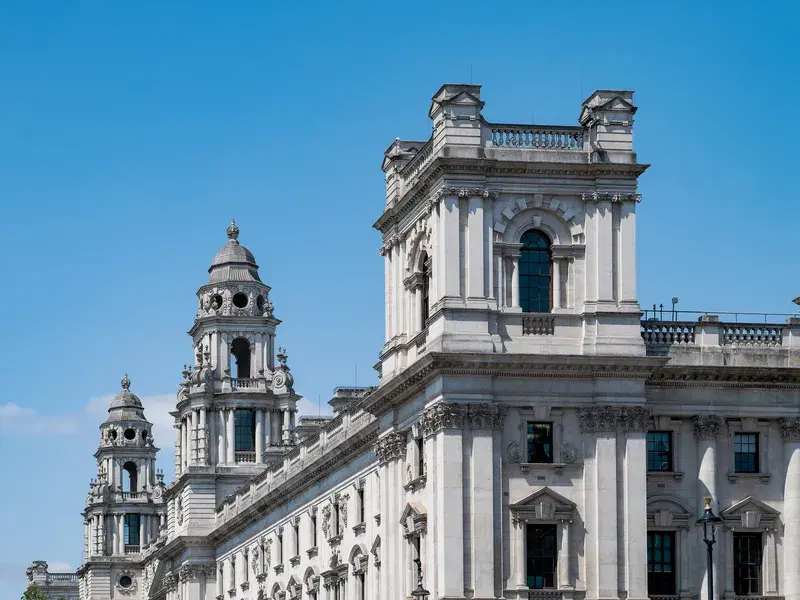
HM Treasury
Office of Financial Sanctions Implementation (OFSI)
Implements and enforces UK financial sanctions and the oil price cap, issues licences and imposes civil penalties; it also leads on designations under the domestic counter-terrorism regime.
1 list in dilisenseOfficial source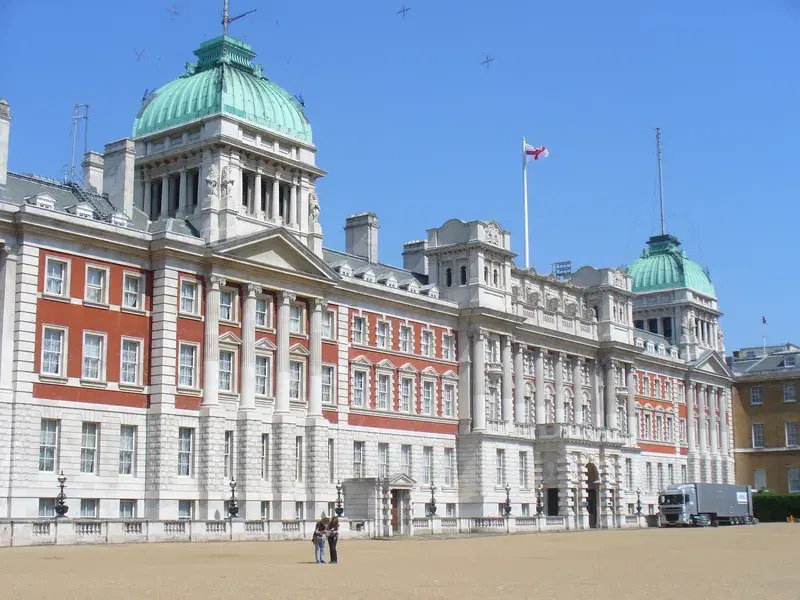
Department for Business and Trade
Office of Trade Sanctions Implementation (OTSI)
Launched in October 2024, OTSI leads civil enforcement of sanctioned services and of trade in sanctioned goods and technology outside the UK that involves a UK person.
No list of its ownOfficial source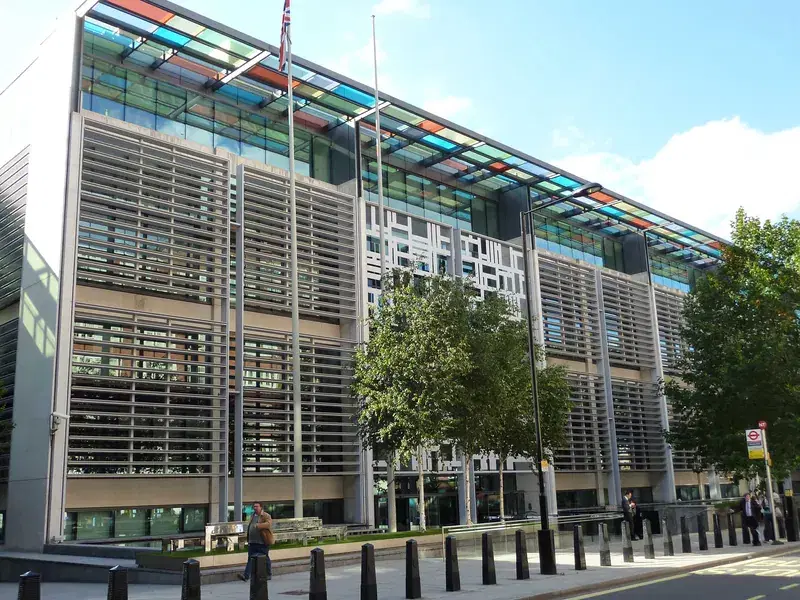
Home Office
Proscribes terrorist organisations under the Terrorism Act 2000 – belonging to or inviting support for one is a criminal offence – and enforces sanctions travel bans.
1 list in dilisenseOfficial source
One click on the results page widens the search to 130+ further sanctions lists worldwide and PEP data. Browse all sanction sources
Examples
Notable designations on the UK Sanctions List
| Name | Type | Regime | Listed | Context |
|---|---|---|---|---|
| Vladimir Vladimirovich Putin | Individual | Russia | President of the Russian Federation | |
| Roman Arkadyevich Abramovich | Individual | Russia | Russian businessman, former owner of Chelsea FC | |
| Wagner Group | Entity | Russia | Russian private military company, also proscribed in the UK | |
| PJSC Rosneft Oil Company | Entity | Russia | Russian oil company, designated together with Lukoil | |
| Eagle S | Vessel | Russia | Tanker (IMO 9329760) carrying Russian-origin oil | |
| Xinjiang Production and Construction Corps Public Security Bureau | Entity | Global Human Rights | State-run security and policing body in Xinjiang, China | |
| Atul Kumar Gupta | Individual | Global Anti-Corruption | One of three Gupta brothers, listed over corruption in South Africa | |
| Dmitry Yureyvich Khoroshev | Individual | Cyber | Senior leader of the LockBit ransomware group (LockBitSupp) | |
| Morality Police | Entity | Iran | Iranian police unit enforcing mandatory dress codes for women | |
| Al-Qard Al-Hasan | Entity | Counter-Terrorism (International) | Lebanese financial services and charitable organisation suspected of links to Hizballah |
Click a name to run it through the free search. Dates link to the official designation notice.
OFSI Consolidated List
Looking for the OFSI Consolidated List? It is now the UK Sanctions List.
A short history first: on 28 January 2026, OFSI closed its Consolidated List of Asset Freeze Targets. Since then, the UK Sanctions List published by the FCDO has been the only official source for all UK designations: financial, trade, immigration and transport sanctions.
One list stays separate: the FCDO and OFSI publish a list of 11 entities subject to financial and investment restrictions under the Russia regime.
What changes for you? Procedures, screening rules and contracts that still name the OFSI Consolidated List should now point to the UK Sanctions List. Our search covers every UK designation, whichever list your procedures refer to. The list changed, the obligation did not.
The UK Sanctions List, explained
What is the UK Sanctions List?
In one sentence: the UK Sanctions List is the official register of all individuals, entities and ships designated under UK sanctions law, published by the Foreign, Commonwealth & Development Office. It covers every UK sanctions regime, from country regimes such as Russia, Iran and North Korea to thematic regimes on cyber activity, global human rights and global anti-corruption.
Each entry answers three questions: who is designated, under which regime and with which measures. The measures range from an asset freeze or a travel ban to trade restrictions and director disqualification.
Identifying details such as dates of birth, nationalities, aliases and addresses help you tell a true match from a namesake. A name match is a lead, not a verdict.
What information does the UK Sanctions List contain?
First, the structure: each entry covers one designated person or specified ship under one sanctions regime. Someone designated under several regimes therefore has several entries, each with its own Unique ID. The main fields:
- Identifiers: the Unique ID (for example RUS0270), the OFSI Group ID carried over for financial sanctions targets listed before 28 January 2026, and the UN reference number for UN listings.
- Names: the primary name, spelling variations and aliases, plus names in non-Latin script such as Cyrillic or Arabic.
- Individuals: date of birth (sometimes only partly known), town and country of birth, nationality, passport and national ID numbers, position and addresses.
- Entities: type of entity, business registration numbers, parent company, subsidiaries, addresses and contact details.
- Ships: the IMO number, such as 9329760 for the tanker Eagle S, plus owners or operators, current and previous flags, ship type, tonnage and year built. The IMO number stays the same when a ship is renamed or reflagged.
- The designation: the regime, whether it is a UK designation, a UN designation or both, and the sanctions imposed, such as an asset freeze, travel ban or director disqualification. It also records the UK statement of reasons, the date designated and the date last updated.
The FCDO publishes the list in seven formats: CSV, XML, ODS, ODT, HTML, TXT and PDF, with identical data in each. It also runs an online search tool with optional fuzzy matching and sends email alerts when the list changes.
A warning on that tool: using it does not limit your liability or reduce your obligation to carry out due diligence. The tool finds names, the responsibility stays with you. Read what effective sanctions screening involves.
Who maintains and enforces UK sanctions?
Designations are a ministerial decision, in most cases the Foreign Secretary’s. The FCDO publishes them on the UK Sanctions List. Enforcement is split by type of measure:
- OFSI, part of HM Treasury, implements and enforces financial sanctions such as asset freezes.
- OTSI, the Office of Trade Sanctions Implementation, leads civil enforcement of sanctioned services and of trade in sanctioned goods and technology outside the UK that involves a UK person.
- HMRC, as the UK customs authority, enforces trade sanctions on goods crossing the UK border and on strategic goods and technology. Together with the National Crime Agency, it also investigates criminal breaches.
- The Department for Transport (transport sanctions), the Home Office (travel bans), the Insolvency Service (director disqualification) and Ofcom (internet services) enforce the other measures.
Several enforcers, one list: whichever authority enforces a measure, one check against the UK Sanctions List finds the designation behind it. One exception follows in the Russia section: a separate list of 11 entities.
Who has to screen against UK sanctions?
UK sanctions apply to everyone in the UK and to all UK nationals and UK companies, wherever they do business. The core prohibition: you must not make funds or economic resources available to a designated person, directly or indirectly. Any business with customers, suppliers or counterparties needs a UK sanctions check. On top of that, the Financial Conduct Authority expects the firms it regulates to have effective sanctions systems and controls.
“Relevant firms” carry additional duties. They include banks, payment and e-money institutions, cryptoasset businesses, insurers, accountants, legal professionals and estate agents. They must report to OFSI as soon as practicable. The trigger: in the course of their business, they know or have reasonable cause to suspect that someone is a designated person or has breached financial sanctions.
The report must also state any funds or economic resources they hold for a designated customer. For relevant firms, reasonable suspicion already triggers the report.
Ownership and control: the hidden part of the list
What the list does not show: an asset freeze also covers entities that a designated person owns or controls, for example by holding more than 50% of the shares or voting rights. These companies are frozen without appearing on the list by name.
The consequence: a UK sanctions check should cover beneficial owners and directors, not just the customer entity. More on that: enhanced due diligence. A clean company name proves little if its owner is listed.
UK sanctions on Russia
Start with the scale: Russia is by far the largest UK sanctions regime. On 2 October 2026, 3,499 of the 6,370 entries on the UK Sanctions List were designated under the Russia (Sanctions) (EU Exit) Regulations 2019: 1,951 individuals, 915 entities and 633 ships.
The regulations combine several types of sanctions:
- Financial sanctions: asset freezes, plus restrictions on investment, securities, loans and trust services.
- Trade sanctions: bans on exporting military, dual-use and luxury goods to Russia, on importing Russian oil, gold, diamonds, iron and steel, and on providing professional services such as accounting, consulting and legal advice.
- Transport, immigration and director disqualification sanctions: port bans for Russian and specified ships, travel bans, and bans on acting as a company director.
The pressure keeps rising. In October 2025, the UK designated Russia’s largest oil companies, Rosneft and Lukoil. In February 2026, it added the pipeline operator Transneft, taking the total under the Russia regime past 3,000.
Then the shadow fleet: since March 2026, UK armed forces and law enforcement can board sanctioned vessels in UK waters. By 1 October 2026, the UK had sanctioned nearly 600 tankers of Russia’s shadow fleet.
What does this mean for your screening? Two points. First, the FCDO and OFSI publish a separate list of 11 Russian entities subject to restrictions on securities, loans and credit. These restrictions also extend to entities they own outside the UK.
This list is not part of the UK Sanctions List. Most of the 11, including Sberbank, VTB Bank and Gazprombank, are also designated with an asset freeze on the UK Sanctions List. OPK Oboronprom, however, appears only on the separate list. Screen against the main list alone, and you miss it.
Second, the list moves fast, as the designations since October 2025 show. A customer who was clean at onboarding can be listed next month, so keep your customer base under ongoing monitoring. A clean result is only as current as the list it was checked against.
Penalties for breaching UK sanctions
How expensive can a breach get?
- Civil penalties: OFSI can impose up to £1 million or 50% of the value of the breach, whichever is higher.
- Strict liability: since June 2022, OFSI no longer has to prove that a firm knew or suspected it was dealing with a designated person.
- Criminal penalties: breaches of financial sanctions carry up to 7 years in prison.
- Voluntary disclosure: disclosing a breach promptly can reduce the civil penalty significantly.
The lesson: screen before you deal, and disclose a breach before OFSI finds it.
Compared
UK sanctions compared with the EU, US and UN
Swipe the table sideways to see all four regimes →
| Aspect | United Kingdom | European Union | United States | United Nations |
|---|---|---|---|---|
| Main sanctions list | UK Sanctions List (FCDO) – the only source of UK designations since 28 January 2026 | Consolidated Financial Sanctions List, maintained by the European Commission | OFAC's Specially Designated Nationals and Blocked Persons (SDN) List | UN Security Council Consolidated List |
| Designations made by | FCDO; HM Treasury for the domestic counter-terrorism regime | Council of the EU, unanimously, on proposals from the High Representative and Commission | Treasury (OFAC) and the State Department; Commerce (BIS) for export control lists | Mainly the Security Council's sanctions committees, deciding by consensus |
| Legal basis | Sanctions and Anti-Money Laundering Act 2018 (SAMLA) and regulations made under it | Council Decisions (Art. 29 TEU) and directly applicable Council Regulations (Art. 215 TFEU) | IEEPA and the Trading with the Enemy Act, mostly via executive orders; ECRA for export controls | Chapter VII of the UN Charter (Article 41), through Security Council resolutions |
| Sanctions regimes | 35+ country and thematic regimes | 40+ regimes, UN-mandated and autonomous | 35+ OFAC sanctions programmes | 15 regimes, each run by a Security Council committee |
| Ownership rule | Owned more than 50% or controlled by a designated person; separate stakes not simply added up | 50% or more, adding up listed owners' stakes, or control (Council Best Practices 2024) | Owned 50% or more by blocked persons, individually or in aggregate; control alone does not block automatically | Assets owned or controlled, directly or indirectly, by listed persons; no % threshold set |
| Who must comply | Everyone in the UK, plus UK nationals and UK-incorporated companies worldwide | Anyone in the EU, EU nationals and EU companies worldwide, and any business done in the EU | US persons worldwide and anyone in the US; non-US firms can be liable via USD payments or US goods | All UN member states (Art. 25 UN Charter); businesses are bound through national or EU law |
| Where to report a match | OFSI, as soon as practicable – a legal duty for relevant firms such as banks | Competent authority of the member state where you are resident or located, immediately | OFAC, within 10 business days of blocking property or rejecting a transaction | Your national competent authority; member states liaise with the UN sanctions committees |
| Maximum penalties | Civil: £1m or 50% of the breach value, whichever is higher; criminal: up to 7 years' prison (10 for trade sanctions) | Set nationally; for serious breaches, Directive 2024/1226 requires maximums of at least 5 years' prison and 5% of turnover or €40m | IEEPA (most programmes) – civil: $377,700 or twice the transaction value, whichever is greater; criminal: up to $1m and 20 years' prison | None at UN level – member states impose penalties under national law |
One subscription
UK, EU, US and UN sanctions – already covered in one subscription
No separate feeds or licences per jurisdiction: a dilisense subscription screens all four regimes together with 130+ further sanctions lists and PEP data – via API, batch upload or ongoing monitoring. Start with 100 free API calls per month.
How it works
How to check a name against the UK Sanctions List
- 01
Enter the name
Type a person or company name into the search above. Fuzzy matching also catches spelling variants and transliterations.
- 02
Compare the identifiers
Compare date of birth, nationality, aliases and addresses: they separate a true match from a namesake.
- 03
Document and act
Record every check, clean ones included. For a confirmed match: freeze the assets, stop the transaction, report to OFSI.
Screening more than a handful of names?
UK Sanctions List: frequently asked questions
Only as an archive: OFSI stopped updating its Consolidated List of Asset Freeze Targets on 28 January 2026. It remains online for reference only and should no longer be used for screening. Since then, anyone looking for the OFSI sanctions list needs the UK Sanctions List published by the FCDO: it is the only official source for all UK sanctions designations. A dilisense search covers all of them.
The UK Sanctions List is the register of designated persons, published by the FCDO. OFSI, the Office of Financial Sanctions Implementation within HM Treasury, implements and enforces financial sanctions against the persons on that list. One is a list, the other an authority.
The closest UK equivalent of OFAC is the Office of Financial Sanctions Implementation (OFSI), part of HM Treasury. Both offices enforce and promote compliance with their country’s economic sanctions. The difference: OFAC publishes its own SDN List, whereas the UK Sanctions List comes from the FCDO, not from OFSI. OFSI implements financial sanctions, issues licences and imposes civil penalties; OTSI and HMRC enforce trade sanctions.
As of 2 October 2026, the UK Sanctions List contained 6,370 entries: 4,054 individuals, 1,645 entities and 671 ships. More than half of them, 3,499 entries, were designated under the Russia regime. One caveat: a person designated under several regimes has a separate entry for each, so the number of distinct people can be lower.
Strictly speaking, none: the UK Sanctions List names individuals, entities and ships, not countries. Each is designated under a regime. Country regimes cover more than 20 countries, including Russia, Belarus, Iran, North Korea, Myanmar and Venezuela. Thematic regimes on issues such as human rights, corruption, cyber activity, chemical weapons, terrorism and irregular migration can target people and companies of any nationality.
Yes. The UK Sanctions List search on this page is free, unlimited and requires no sign-up. It searches every UK sanctions list; one click on the results page widens it to all other sanctions lists and PEP data. To screen customers automatically, use the dilisense AML Screening API or Batch Screening.
The FCDO updates the UK Sanctions List whenever designations are added, amended or removed: often several times a week. dilisense checks its sources multiple times a day, so changes become searchable shortly after publication.
Under UK law, no: it requires compliance with UK sanctions only. In practice, many UK firms also screen against the US sanctions lists and the EU sanctions list, for example when they deal in US dollars, have EU subsidiaries or their banks require it. A dilisense search covers all of them at once.
Verify first: a matching name can belong to a namesake, so compare identifiers such as date of birth and nationality. If it is a true match, stop the transaction, make no funds available, freeze any assets you hold and report to OFSI. This page is not legal advice: involve your compliance officer or legal counsel.

Talk to our team about API access, batch screening and monitoring.
Insights
Further reading
13 min read
What is Sanctions Screening?
Get an overiew of one of the most crucial compliance processes.

5 min read
What does the FCA do?
Understanding the role and responsibilities of the UK's financial regulator.
5 min read
Types of Sanctions: Comprehensive, Targeted, Sectoral and Secondary
How sanctions differ by scope, instrument and jurisdiction, plus what each type means for screening.
Other sanctions jurisdictions
Photos: Building by Anthony O'Neil (opens in a new tab), CC BY-SA 2.0 (cropped) (opens in a new tab) · flag by LA(Phot) Simmo Simpson / MOD (opens in a new tab), OGL v1.0 (opens in a new tab) · Foreign, Commonwealth & Development Office (FCDO) by Colin / Wikimedia Commons (opens in a new tab), CC BY-SA 4.0 (cropped) (opens in a new tab) · Office of Financial Sanctions Implementation (OFSI) by Tilman2007 (opens in a new tab), CC BY-SA 4.0 (cropped) (opens in a new tab) · Office of Trade Sanctions Implementation (OTSI) by Colin Smith (opens in a new tab), CC BY-SA 2.0 (opens in a new tab) · Home Office by Steph Gray (opens in a new tab), CC BY-SA 2.0 (cropped) (opens in a new tab)